152
152
Why travel?
31 July 2026, Friday |
 152
152


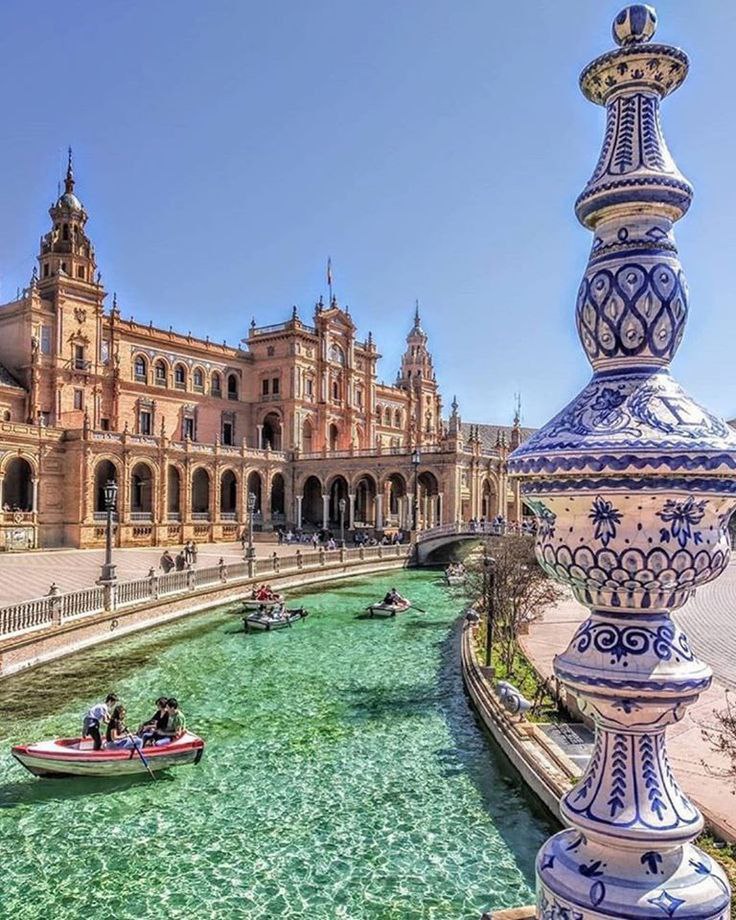
Seville (Spanish: Sevilla [seˈβiʎa], a city in southern Spain, the capital and largest city of the autonomous community of Andalusia. Located on the banks of the Guadalquivir River, 80 km from the Atlantic Ocean. Residents of the city are called Sevillanas or Hispalenses ), because the Romans called the city Ispalis. In 2011, the population of the city of Seville was about 703,000, and with its suburbs - 1.5 million. According to these indicators, Seville is 4th in Spain and 30th in the European Union. In Seville There are three World Heritage Sites recognized by UNESCO: the Alcazar palace complex, the Cathedral and the Archives General of India.
Seville was founded on the site of the Roman city of Ispalis and was known as Ishbilia (Arabic: إشبيلية) after the Arab conquests in 712. During the period of Arab rule (711-1492), Seville belonged to the Emirate of Cordoba (750-929), the Caliphate of Cordoba (929-1031), and after gaining independence it became part of the Seville Taifa. It was later occupied by the Berber states of Almorawi (1085–1172) and Al-Mohad (1172–1248). The troops of Ferdinand III of Castile liberated Seville in 1248. After the discovery of America, the city became one of the economic centers of the Spanish Empire, and its port became the main center of transoceanic trade during the Spanish Golden Age. In 1519, Ferdinand Magellan set off from here on his first trip around the world.
In the 20th century, Seville witnessed the horrors of the Spanish Civil War. Cultural events were held during this period, including the 1929 Ibero-American Exposition and Expo '92. That same year, Seville was chosen as the capital of Andalusia. The Arab historian Al Sakund said: “Whoever has not been to Seville has not seen the miracle,” and his words became a proverb.
3250


0033, Kievyan 17, Yerevan, Armenia
+374(93)448789, +374(43)448789
info@utours.am


UTours © 2026 All Rights Reserved
Sign in to your personal account
Referral login
Register