

 355
355
Why travel?
31 July 2026, Friday |
 355
355
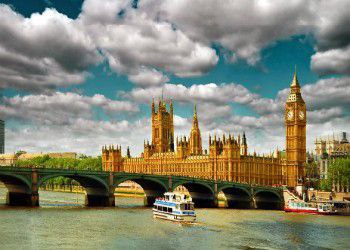
1. Big Ben is not the name of the tower
This is a very common misconception, but Big Ben is not actually the name of the famous London tower. Big Ben is actually the name of the clock on the tower. Even locals today call this place Big Ben Tower. The tower is located in the northern part of the Palace of Westminster in London. Since 2012 it has been called the Elizabeth Tower, but previously the tower was called the Clock Tower.
2. London is the smallest city in England.
The city of London covers an area of just 1.2 square miles and has a population of approximately 7,500 people. So London is actually the smallest city in England. On the other hand, Greater London is an English region comprising surrounding cities of 606 square miles with a population of over 8.7 million people.
3. There are 170 museums in London.
London is an important cultural and historical center and the museums in the area are not to be missed. If you visit this wonderful city, you will surely miss out on much of your trip if you don't stop at one of these. The British Museum, the National Gallery, the Imperial War Museum, the British Library and the Wallace Collection are just a few.
4. The world's smallest statue was built in London.
The statue, depicting two mice eating a piece of cheese, is known as the smallest statue in the world. It's so small that you have to pay attention to it or someone has to point it out to you. The story behind this is quite interesting. The story goes that the statue was built in memory of two construction workers who got into a fight after accusing each other of eating their lunch. Both died, and it was later discovered that the mice had indeed eaten their food.
5. More than 300 languages are spoken in London.
There is hardly a more diverse place in the world than London. Immigrants of various nationalities make up the majority of its population, which numbers about 8.7 million inhabitants. They observe their original traditions and communicate in their native language. Because of London's incredible diversity, it is estimated that over 300 languages are spoken in London.
6. What does London mean?
The city has a long and little-known history. Some persistent theories claim that London was first built by the Romans around 50 AD. The origin of its name also has a mysterious history. Throughout history, London has had different names, including Londonium, Ludenwyck, Ludenberg. The most common version is that the name London comes from the ancient Celtic word “Londinous”, which means “brave”.
7. The 8 Houses of Parliament are the largest chambers in Great Britain.
One of the many architectural landmarks that London boasts is undoubtedly the Houses of Parliament, also known as the Palace of Westminster. Considered the largest palace in the entire country, it was first built in the early 11th century to house the King of England. Unfortunately, a fire in 1512 destroyed most of it, and another fire in 1834 caused more serious damage. The only medieval buildings surviving from this time are Westminster Hall, the Jewel Tower, St Stephen's Cloisters and St Mary Undercroft's Chapel.
8. London buses weren't always red
Red buses are definitely the most typical thing you associate with London. Iconic cars didn't always have this color. Once upon a time, each of them had a different color and each color meant a different route. To stand out from its competitors, the largest bus company, the London General Omnibus Company, decided to paint its buses red in 1907. Since then, London buses have turned red.
1277

Sign in to your personal account
Referral login
Register