146
146
Why travel?
31 July 2026, Friday |
 146
146


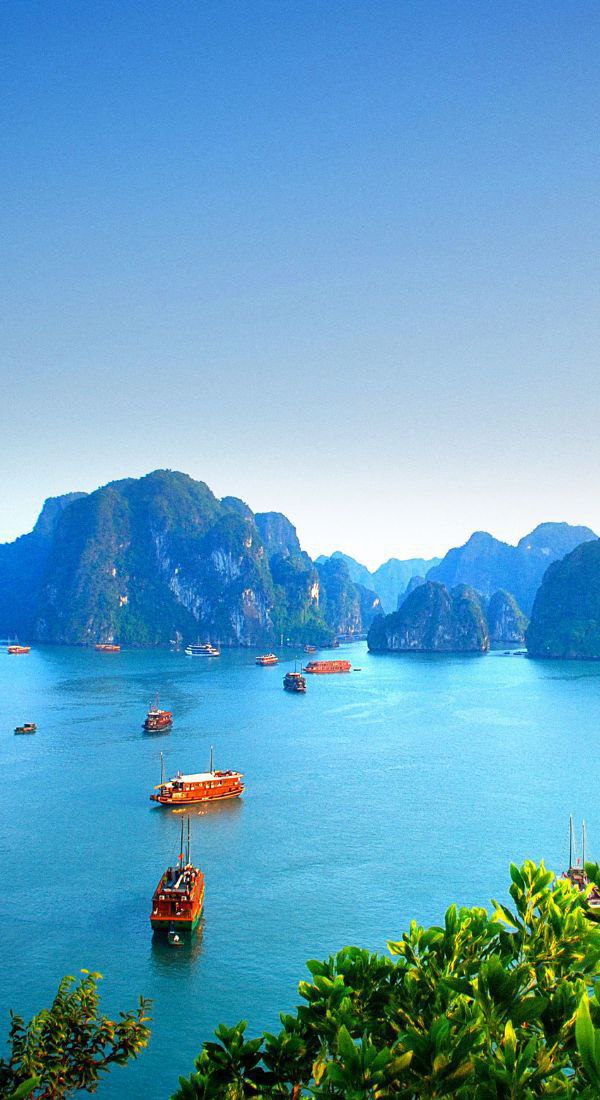
It is located at 8 ° 10 'and 23 ° 24' in the northern parts of 102 ° 09 'and 109 ° 30' to the east. From the east, the country is erasing the southern plate, from the west, the Bay of Thailand. The length of the Seax is 3960 km. Vietnam Square includes islands located in the sea and Thailand Bay, including a parasite and part of the islands of Setersley. The largest (km 2), Phu Quoc (568), Catba (180), Con Dao (50). Vietnam borders China in the north (the border length is 1300 km), Laos (650 km) in the west, Cambodia (930 km). From the north, a country from the north is 1650 km long, west of the east, 600 km in the south and approx. 50 km in the central part of Vietnam. Western and internal regions of Vietnam occupy the mountains and plateau of Junnan mountainous places. Trung Song -Khrebet extends from 1400 km to the south to the south. A narrow slippery walks in the palm of your hand. In the north and south there are two plains that were formed from the CED -DEPP -River Krasnaya and Mekneg, the region of which is 15 thousand and 40 thousand km2, respectively. The rivers belong to the naval basin of the southern chair. Their total length is 41 thousand km. The largest rivers (km): Red (1149, 510 in Vietnam) and man (4220, 220 Vietnam). The most important lakes (HA). In the south of Darlak (1 thousand), in the north, Baba (500), Khana, West (466). The intestines are rich in minerals, coal, natural gas, iron, manganese, copper, etc. The most significant reserves are coal, 12-15 billion tons, apatitis up to 1 billion tons. Real oil reserves are estimated at 2.5 to 3.5 billion tons, natural gas - from 600 to 1200 billion m3. Hydropower resources are estimated at 80 billion kWh. The land fund is 33.2 million hectares. Agricultural land occupies 7.5 million hectares (21% of the total area). Four types of land, a red country and basalt - 16 million hectares, 8.5 million alluvial, 2.5 million, a high mountain stone and 3.3 million hectares.
The climate is subtropical and savvy, formed from mountain northeastern martyrs and sea to the southwestern winds from the sea. Summer, when the ocean prevails in the air stream, this is a rainy season. Winter, when air flows from the ground to the sea, is dry weather. The average temperature of the warmest month (in the north of June, July in the south) is approximate). 29 ° C; The coldest is 15 ° C in the north (January) to 25 ° C in the south (December). In the northern regions, the average annual precipitation is up to 2830 mm, in the southern regions up to 1600 mm. There are 289 families in the forest: 1850 generations and 7000 plant species; 1000 species of birds - 300 mammals. Along the coastline, there are almost 1000 types of fish (600-700 thousand tons of hunting per year) and other valuable seafood. 500 thousand tons of salt are produced annually.
1286


0033, Kievyan 17, Yerevan, Armenia
+374(93)448789, +374(43)448789
info@utours.am


UTours © 2026 All Rights Reserved
Sign in to your personal account
Referral login
Register